Billy Two Rivers, a former professional wrestler, is suing musician Van Morrison and his record label company, claiming that, by using his likeness on the cover of the upcoming Roll With the Punches album, they infringed his right of publicity, as protected by New York State’s statutory right to publicity, New York Civil Rights Law §§ 50 and 51, and false endorsement under the Trademark act. The case is Two Rivers v. Morrison, 1-17-cv-05720 (Southern District of New York).
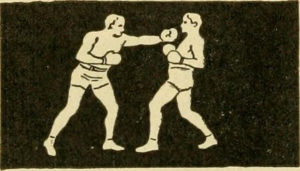 To say that Plaintiff has had an interesting life is an understatement, as he was a professional wrestler from 1953 to 1977, competing in Canada, the U.S. and abroad. He appeared in ten films and television programs. After retiring, he was for 20 years a leader of the Mohawk nation on the Kahnawake reservation, as an elder and a counselor. He is still recognized as an elder and advisor to the First Nations people. The British band The Dogs D’Amour named a song after him in 1988, and Pulitzer Prize-winner Paul Muldoon wrote a poem, “My Father and I and Billy Two Rivers”, about watching Plaintiff competing in a wrestling match. A British racing horse was named after him, with Plaintiff’s consent.
Roll With the Punches will be Van Morrison’s 37th studio album and is set for release on September 22, 2017. Its cover features a black and white photo of Plaintiff engaged in a wrestling match. The cover of the album was used to promote Van Morrison’s tour, and generally to promote the sale of the album, both online and off-line. Plaintiff claims he did not authorize the use of this photo for the album cover. The complaint alleges that he was not even contacted by Defendants.
New York Civil Rights Law § 50, enacted in 1903, makes it a misdemeanor for “[a] person, firm or corporation [to use] for advertising purposes, or for the purposes of trade, the name, portrait or picture of any living person without having first obtained the written consent of such person, or if a minor of his or her parent or guardian...” We saw in a former post that the New York Legislature is actively trying to expand the scope of the law. However, Plaintiff does not need such expansion to file his suit. If the fact alleged in the complaint can be proven, it is a clear case of unauthorized use of likeness for commercial purposes.
Plaintiff is asking the court to enjoin any further use or dissemination of the cover, and to permanently dispose of the albums already produced. He is also asking the court to award him punitive damages. The case settled out of court.
This post first appeared on The 1709 Blog.


 by
by 



 Photographer Donald Graham filed a copyright infringement suit against Prince in 2016 (see




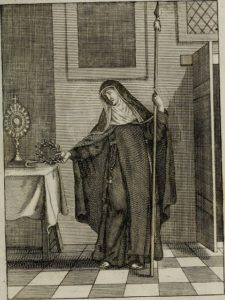 Dmitry Chernyakov had not modified the score or the dialogue. However, his interpretation did not take place during the French revolution, but in contemporary time. In the last scene, the Carmelites are locked up in a shed full of explosives. Blanche appears on the scene and pulls them all out to safety, one by one. She then comes back to the shed which explodes, killing her, an apparent suicide.

 There is no likelihood of confusion as to Plaintiff’s sponsorship because the ad is parody








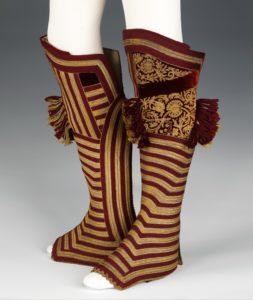 Useful articles cannot be protected by copyright, but a pictorial, graphic, or sculptural work incorporated in the useful article can be protected if it is separable from the useful article. However, such design must be capable of being “identified separately from, and [must be] capable of existing independently of the utilitarian aspects of the article,” 17 U.S.C. § 101. The design can be physically separable or “conceptually separable” from its utilitarian aspect. Physical separability occurs if the feature seeking copyright protection can “be physically separated from the article by ordinary means while leaving the utilitarian aspects of the article completely intact,”


